
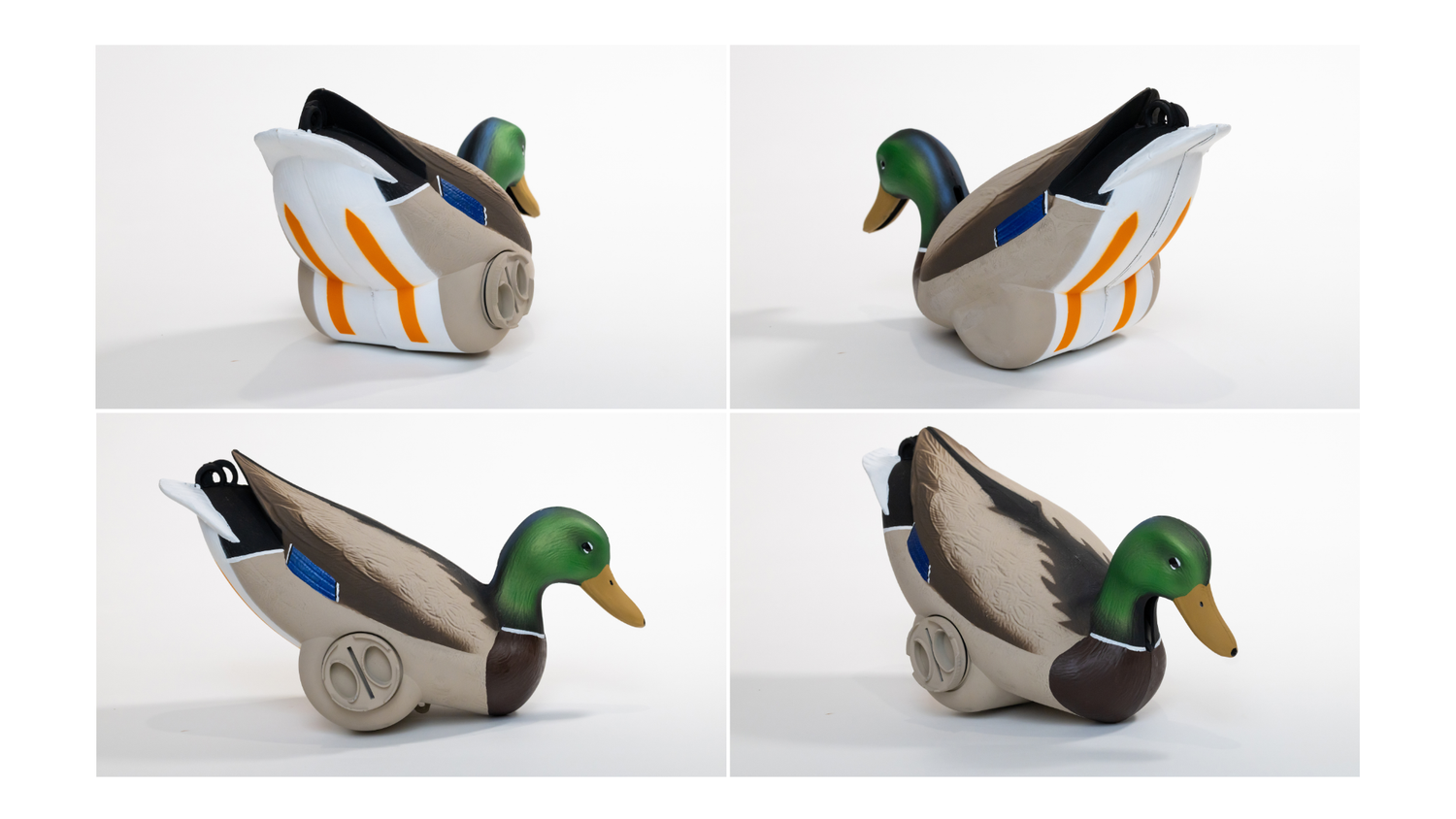
Every waterfowl hunter knows the frustration of a silent spread on a morning when the birds are flying. You can see them working the area, circling overhead, looking — and then flaring off at the last moment. In most cases, the issue is not the location, the calls, or the blind. It is the decoys. A static, flat-looking spread in 2026 does not fool pressured ducks that have seen hundreds of setups across a season.
The best duck decoys in 2026 are not just about paint quality or realistic body shapes. They are about motion, visual authenticity, and the ability to make a spread look alive from the moment birds enter the area. Waterfowl hunting has evolved, and the decoy market has evolved with it. Whether you are running a small timber hole, a wide-open flooded field, a river bend, or a shallow marsh, the right duck decoys for sale are out there — and this guide helps you find them.
If you want to skip ahead and explore motion duck decoy options built specifically for serious hunters, start on the Jahpoo homepage and review what makes their approach different.
What Separates the Best Duck Decoys from the Rest
Before breaking down specific recommendations, it is important to understand what the criteria actually are for a decoy that produces results in the field — not just in a product photograph.
Motion and Water Movement
Static decoys work in low-pressure situations where birds have not been heavily hunted. In pressured areas — which describes the vast majority of public land and even many private setups by mid-season — motion is the single biggest differentiator between a spread that pulls birds and one that gets ignored.
Natural water movement, butt-up feeding motion, and subtle body rocking create the kind of visual authenticity that triggers the feeding behavior response in incoming ducks. A spread that moves the water around it looks alive. A static spread, no matter how well painted, looks like what it is.
Realistic Painting and Detail
The level of hand painting on a decoy affects how birds read it from altitude. Ducks are visually acute animals and they are assessing your spread from distances where subtle color contrast, speculum detail, and body position all contribute to a go or no-go decision. Decoys painted with sharp contrast and accurate species-specific coloring consistently outperform flat, faded, or glare-prone alternatives.
Durability for Real-World Conditions
Duck hunting is not gentle on gear. Decoys get shot, thrown, stepped on, driven over, frozen, and transported hundreds of times over a season. A decoy that looks perfect in a warehouse photograph but cracks, fades, or breaks after two months in the field is not worth its purchase price. Durability has to be evaluated on field performance, not lab specs.
Battery Life and Operational Reliability for Motion Decoys
For any motion duck decoy, battery performance in cold temperatures is a critical real-world specification. Batteries discharge faster in cold weather, and most waterfowl hunting happens at temperatures where battery chemistry is already under stress. A motion decoy that delivers the rated run time at 32°F and above is a different category of product from one that only delivers that performance at room temperature.
Best Duck Decoys for 2026 by Hunting Situation
Best Motion Duck Decoy for Feeding Spreads: Jahpoo Flyway Deputy

The Jahpoo Flyway Deputy is a full-body, butt-up feeding motion decoy built by Jahpoo — a waterfowl motion decoy company based in Austin, Texas, that describes itself as revolutionizing the motion duck decoy industry.
The Flyway Deputy mimics a mallard drake in the feeding position — head down, tail up — which is one of the most compelling visual signals you can put in a spread because feeding behavior communicates safety to incoming birds. When that posture is combined with actual water motion generated by the internal motor, it becomes one of the most realistic confidence builders available in the duck decoy market.
Key specifications that matter in the field:
- Full-body hand-painted mallard construction with interior-housed battery pack, motor, and weight — no external components to snag lines or break off.
- On/off remote with 30+ yard range, allowing hunters to activate or deactivate without standing up in the blind.
- Continuous run time of 4.5+ hours at 32°F and above — a genuine cold-weather specification relevant to most duck hunting conditions in the USA.
- Combines water motion, flash components, and body movement in a single unit with virtually no setup limitations for placement within a spread.
Jahpoo's brand philosophy — summarized by their tagline "Move That Water" — is centered on the principle that natural water movement around and beneath a decoy is what makes an entire spread look alive, not just the motion decoy itself. That systemic thinking about spread design sets Jahpoo apart from companies that treat motion decoys as isolated products rather than components of a whole visual system.
Best Duck Decoys for Open Water Spreads
On large open water — lakes, reservoirs, big river bends — visibility range is greater and birds are assessing your spread from further distances. For these situations, the priority shifts toward decoys with high visual contrast, species-accurate painting, and larger body sizes that read clearly from altitude.
Foam-filled construction provides buoyancy and durability in choppy conditions. Six-pack sets that mix active, feeding, and resting body positions create a more natural-looking group than uniform posture spreads. Adding a motion decoy like the Jahpoo Flyway Deputy within a larger static spread gives the visual anchor that pulls birds through the final approach.
Best Duck Decoys for Flooded Timber and Tight Holes
Timber hunting is close-range hunting. Birds are often committed before they reach the hole, which means realism at short distance matters more than long-range visibility. In these situations, smaller, highly detailed decoys with matte finishes that minimize glare outperform oversized or glossy alternatives.
Motion in timber needs to be subtle — aggressive spinning wings in a tight hole can flare birds rather than attract them. Low-profile water movement, like the type generated by a butt-up feeding decoy gently rocking the surface, is often more effective than high-velocity motion in enclosed spaces.
Best Duck Decoys for Field Hunting
Field hunting requires full-body decoys with field stakes and a variety of feeding and resting positions. The key is creating visual depth — varied body positions spread across a realistic entry zone that models where birds would naturally land relative to a feeding group.
Motion in field sets traditionally comes from spinning wing decoys or flapping wing decoys that simulate landing or departing birds. These are highly effective early-season attractants that can become counterproductive on pressured birds later in the season, which is why experienced field hunters often switch to more subtle motion mid-season.
How to Build a Spread That Actually Works in 2026
The best individual duck decoy is only as effective as the spread it sits in. A few principles that produce consistent results:
- Set the landing zone first. Birds land into the wind. Design your spread so the open water or open field area where you want birds to commit is positioned into the prevailing wind on your hunting days.
- Mix body positions. A spread of all resting or all active decoys looks unnatural. Mix feeding, resting, and active postures to create the visual variety of a real group.
- Put your motion decoy where it creates the most visual disruption. The Jahpoo Flyway Deputy generates water movement that affects the visual quality of the entire surrounding spread. Position it where incoming birds will see the moving water as they make their final approach.
- Match species to the birds you are hunting. Running a mallard-heavy spread when local birds are predominantly teal or pintail reduces effectiveness. Match your decoys to the species composition you are seeing.
- Adjust spread size to hunting pressure. Smaller, more realistic spreads often outperform massive spreads on pressured public land where birds have learned to associate large decoy numbers with danger.
For more information about Jahpoo's full motion duck decoy lineup, available bundles, and how to integrate their system into your existing spread, visit the Jahpoo homepage.
Jahpoo
Revolutionizing Motion Duck Decoy Hunting
For best duck decoys and motion decoy expertise, visit https://www.jahpoo.com/
Austin, TX | Premium Motion Decoy Specialists | Full Body Motion Innovation
FAQs About Duck Decoys for 2026
Q1. How many duck decoys do I need for a basic spread?
A functional starting spread for most situations is 6 to 12 decoys. On pressured public water, a tighter spread of 6 to 8 highly realistic decoys often outperforms a larger spread of lower-quality decoys. On open water or in large flooded fields, larger spreads of 18 to 36 decoys increase visibility range. The goal is always to match spread size to hunting conditions rather than simply maximizing decoy count.
Q2. Do motion duck decoys really make a difference?
Yes, especially on pressured birds in mid- to late-season. Research and field experience consistently show that motion — particularly realistic water movement and feeding body motion — triggers a positive response in incoming ducks that static decoys cannot replicate. The Jahpoo Flyway Deputy's combination of feeding posture and internal water motion is specifically designed to produce this response even on birds that have learned to be cautious around standard spreads.
Q3. How long do duck decoys last?
Quality foam-filled or hard-plastic duck decoys with matte or UV-resistant paint finishes can last 5 to 10 years or more with reasonable care. Motion decoys have additional electronic and mechanical components that require more careful handling and periodic maintenance. Storing decoys properly, cleaning them after each use, and addressing paint wear proactively extends their effective lifespan.
Q4. What is the best duck decoy for mallards specifically?
Mallard spreads benefit from a mix of drake and hen body positions with accurate plumage detail and a motion element that triggers feeding behavior response. The Jahpoo Flyway Deputy is specifically designed as a mallard drake feeding decoy and is one of the most purpose-built options on the market for hunters targeting mallards specifically.
Q5. Are battery-powered motion decoys legal everywhere?
Battery-powered motion decoys are legal in most USA states and waterfowl zones, but some states or specific management areas restrict them during certain seasons or on certain water bodies. Always check your specific state regulations and any applicable federal migratory bird hunting regulations before hunting with any motion decoy. Regulations change annually.
Q6. Where can I find the best duck decoys for sale online?
Jahpoo offers premium motion duck decoys built specifically for serious waterfowl hunters, including the Flyway Deputy mallard motion decoy and additional products in their lineup. You can browse all available options at https://jahpoo.com/
Conclusion
The best duck decoys in 2026 combine realistic construction, purposeful motion, and field-proven durability — characteristics that matter every time birds are working the area and making the final decision of whether to commit. A spread built around high-quality, motion-capable decoys like the Jahpoo Flyway Deputy gives hunters a measurable advantage, especially on pressured birds later in the season when a static, ordinary spread simply will not close the deal.
Whether you are building your first serious waterfowl setup or upgrading from equipment that has stopped producing results, investing in duck decoys for sale that actually replicate natural duck behavior is one of the highest-return decisions in waterfowl hunting.
0 comments