
The best manager I ever worked for had a habit of making decisions quickly and owning the consequences completely. He did not hedge. He did not cover himself with qualifications or blame the data when something went wrong. He made the call, and then he stood behind it.
I found out later that he had been hunting since he was eight years old. I was not surprised.
There is something about sustained time outdoors that builds a specific kind of character. It is not the kind that comes from reading about leadership or attending seminars. It is the kind that comes from being in situations where the consequences are real, the variables are uncontrollable, and the only thing you can actually manage is yourself.
The Decision That Cannot Be Undone
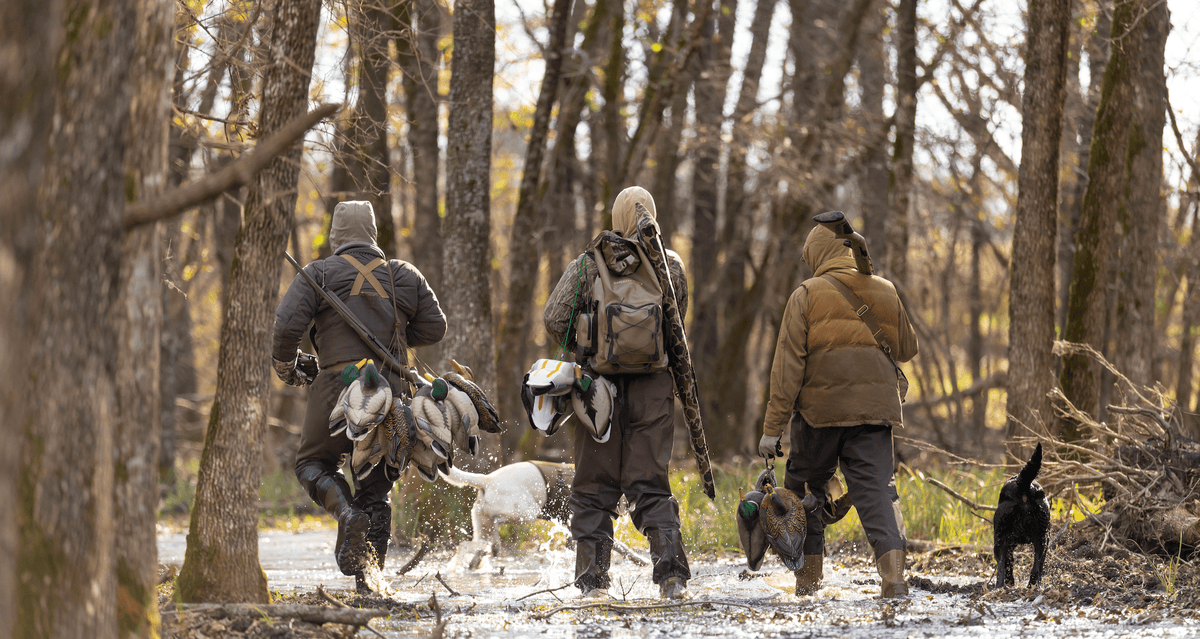
In the field, decisions are irreversible in a way that most professional environments are not. When you choose to take a shot, you cannot un-take it. When you decide to cross a piece of water that turns out to be deeper than it looked, you are committed. When you commit to a spread location and the wind shifts, or you decide to run the motion duck decoys and the birds flare instead of finishing, you live with the result.
This reality trains a different relationship with decision-making than the one most people develop in offices, where every choice can be revised, walked back, or blamed on a committee. The outdoorsman learns to gather available information quickly, make a decision, and move forward. He learns that hesitation is often more costly than an imperfect choice made with conviction.
The best leaders operate the same way. They are not reckless. They gather information and think clearly. But when it is time to decide, they decide. They do not wait for certainty that will never come.
Accountability Without Audience
The outdoors is one of the few environments left where accountability is entirely private. When you miss a shot, there is no performance review. There is no one to blame the equipment, the conditions, or the timing. You either made the shot or you did not, and you know which one it was.
This kind of private accountability is rare and valuable. It builds the habit of honest self-assessment. The hunter who consistently misses and blames the wind is the same person who consistently underperforms at work and blames the market. The hunter who misses, acknowledges it, and adjusts his technique is the person who gets better.
The outdoors strips away the social performance that surrounds most of our professional lives. There is no audience to manage. There is only the result, and your honest relationship with it.
Reading the Room
Experienced outdoorsmen develop a heightened ability to read environments. They notice the subtle shift in wind direction before it becomes obvious. They see the behavior change in the birds before the flock breaks. They know when to run motion duck decoys and when to kill the movement because the birds are already committed. They read the water and the sky and the behavior of everything around them with a constant, low-level attention that becomes second nature.
This skill translates directly to leadership. The best managers read rooms the way a hunter reads a marsh. They notice the change in energy before it becomes a problem. They see the disengagement before it becomes a resignation. They pick up on the signals that most people miss because most people are not in the habit of paying that kind of attention.
The outdoors trains you to pay attention. It rewards the people who notice things. That skill does not stay in the field.
The Standard of the Hard Morning
There is a specific kind of credibility that comes from having been through genuinely difficult physical experiences. It is not about toughness as a performance. It is about the quiet confidence of knowing what you are capable of when things are uncomfortable.
A leader who has spent mornings in freezing water, who has pushed through exhaustion to finish a retrieve, who has sat in the dark for hours waiting for an outcome that was never guaranteed — that person carries a different kind of authority. Not because they talk about it, but because it is visible in the way they handle pressure.
The outdoors does not care about your title. It does not adjust for your salary or your reputation. It gives you exactly what you earn. That is a standard worth bringing back to the office.
0 comments