
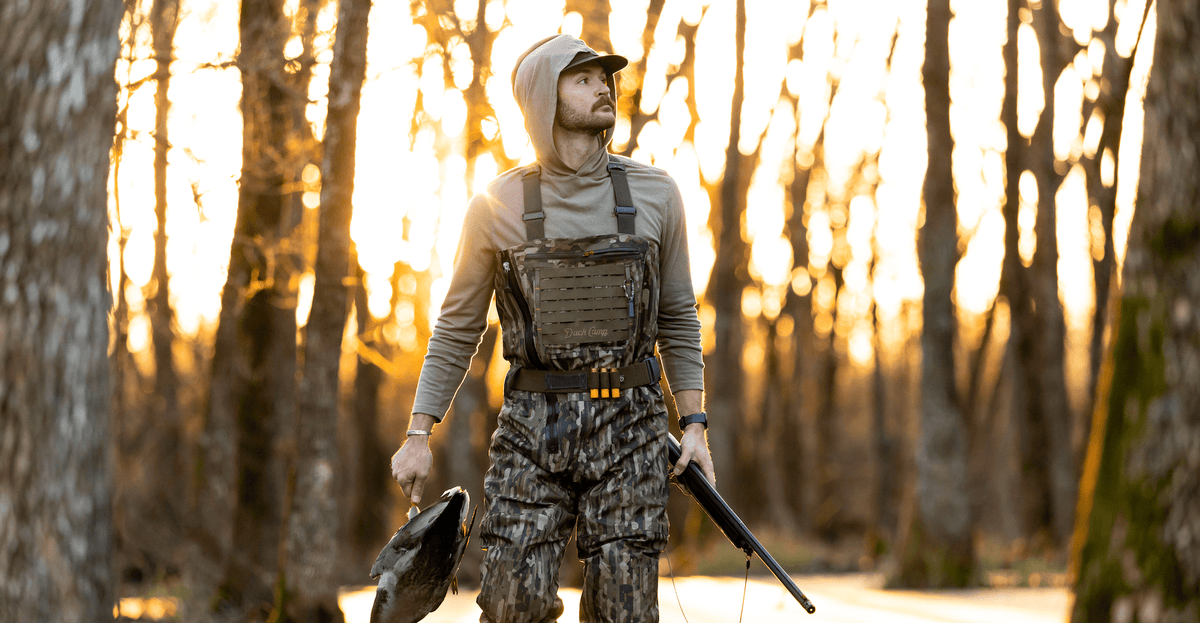
I went alone last November. No hunting partner, no dog — just a small spread, a single motion duck decoy spinning in the chop, and a layout boat on a piece of public water I'd been watching for two full seasons. The weather was bad in exactly the way waterfowl hunters get on their knees and pray for: north wind, dropping temperatures, a low gray sky that looked like it meant business.
I didn't limit out. I came home with three birds and a thermos that had gone stone cold by nine in the morning. By any conventional measure, it wasn't a great hunt.
It was one of the best mornings I've had in years.
**The Noise We Carry**
Modern life is relentlessly, exhaustingly social in a way that no previous generation ever had to deal with. We are reachable at all hours. Our attention is constantly being picked apart by notifications, obligations, and the low-level performance of being present and responsive to everyone, all the time. Even our leisure time has become a social exercise — we document it, share it, and curate it for an audience that may or may not care.
The result is that most people never actually experience genuine solitude. They experience being alone, which is a completely different thing. Being alone in your apartment with your phone isn't solitude. It's just loneliness with a brighter screen.
Real solitude is the deliberate removal of external input. It's the decision to sit with your own thoughts, without the buffer of entertainment or the comfort of company. It's uncomfortable at first — genuinely, squirmingly uncomfortable — and then it becomes something else entirely.
**What Happens When You Go Alone**
The first hour alone in the field is the hardest. Your brain is still running the same loops it runs at the office — the unfinished tasks, the conversations you haven't had yet, the thing you forgot to do on Thursday. The absence of distraction doesn't quiet the noise right away. It makes it louder first.
But somewhere in the second hour, something shifts. The loops slow down. Your attention stops pointing inward and starts pointing out — toward the environment, toward the water, toward the birds. You start noticing things you would have completely missed if you'd been talking: the way the light changes on the water as the sun tries to push through the clouds, the subtle difference in how birds work the near edge of the spread versus the far edge, the specific quality of the silence that settles in between wind gusts. You start watching your motion duck decoy differently, too — not as a piece of gear, but as a living part of the spread, doing its job, selling the lie.
Psychologists call this state **attentional restoration**. The natural environment — particularly open water and landscapes with depth and complexity — has a measurable, documented ability to restore directed attention, the kind of focused, effortful mental energy we burn through at work. Time in nature doesn't just *feel* restorative. It demonstrably, scientifically is.
**The Honest Accounting**
Going alone also forces a specific kind of self-reckoning that group hunting simply doesn't allow. When you're with other people, the social dynamics of the group absorb a huge chunk of your mental bandwidth. You're managing relationships, reading moods, and running the small social calculations that happen automatically any time humans are together.
Alone, there's no one to perform for. No one to blame for the missed shot or the wrong call. No one to look at when a group of birds flares off your spread and you know — you *know* — you should have repositioned that motion duck decoy twenty yards to the left an hour ago. It's just you, the environment, and the brutally honest accounting of how you're actually doing.
This is valuable in a way that's genuinely hard to explain to someone who hasn't felt it. The hunter who spends regular time alone in the field knows himself in a way that the guy who's never alone just doesn't. He knows his patience threshold. He knows how he handles failure when nobody's watching. He knows what he actually thinks about things, rather than what he says he thinks in company.
**The Permission to Be Unproductive**
There's also something to be said for the permission that solitude gives you to simply exist without producing a single measurable thing. Every other hour of your day is accounted for in output. Meetings have agendas. Workouts have metrics. Even hanging out with friends carries an unspoken expectation of engagement and reciprocity.
A morning alone in the field produces nothing you can put in a spreadsheet. The birds you bring home are almost beside the point. The motion duck decoy bobs and spins whether you're watching it or not. The value is in the hours themselves — the cold, the quiet, the uninterrupted time with your own mind and nobody else's agenda.
We are not built for the pace we keep. The field is one of the last places on earth where the pace is set by something other than us. Go alone when you can. The silence will tell you things you needed to hear.
0 comments