
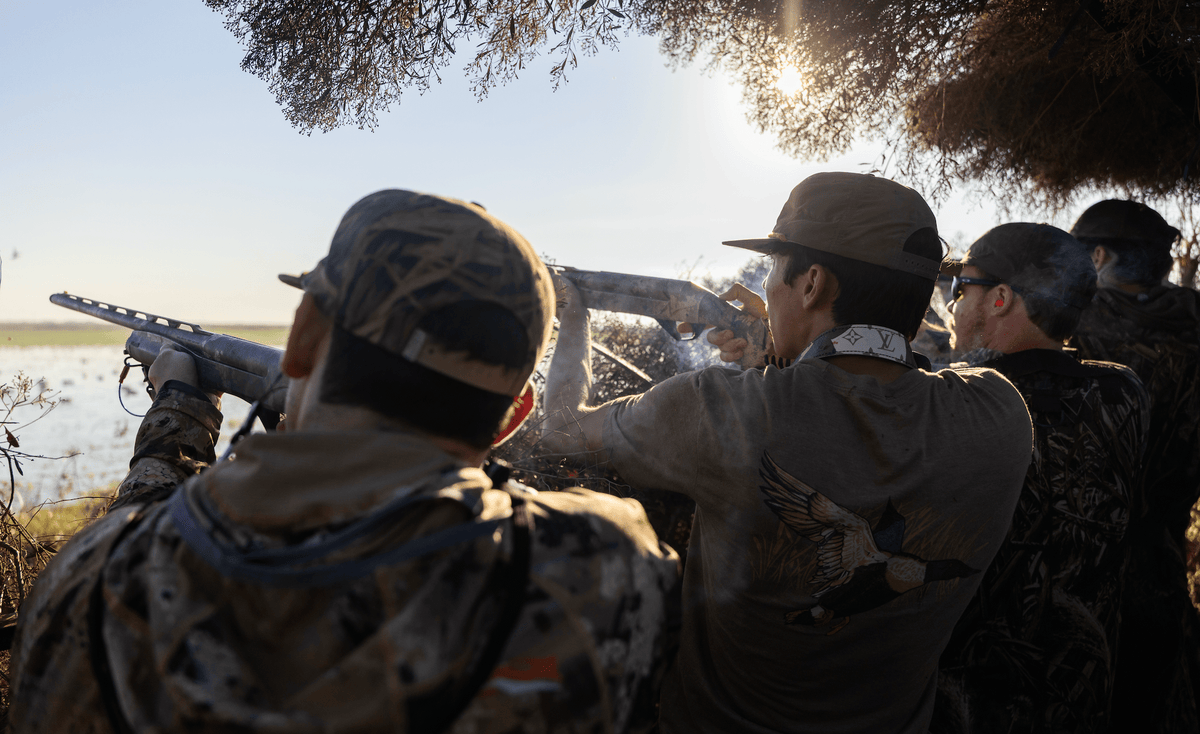
There is a specific type of misery that can only be found off the coast of New England in late January. The wind comes directly off the North Atlantic, carrying a freezing salt spray that coats everything in a layer of ice. The water is the color of slate, and it moves with a violent, heavy swell that makes standing in a boat feel like trying to balance on the back of a moving animal.
You cannot feel your fingers. Your face is numb. The spray freezes to the action of your shotgun.
By any rational standard, it is an awful place to be. And yet, for the serious waterfowl hunter, the sea duck hunt is a pilgrimage. It is the ultimate test of endurance, gear, and resolve.
The Contrast to the Marsh
Most duck hunting takes place in relatively sheltered environments. Flooded timber, coastal marshes, and agricultural fields offer their own challenges, but they are generally predictable. You can read the wind, find the lee shore, and set up a blind that offers some degree of comfort.
The open ocean offers no such concessions. When you are hunting eiders or scoters off the rocky coast of Maine or Massachusetts, you are entirely exposed. The layout boats ride inches above the swells. The long-line spreads of motion duck decoys pitch and roll in the surf. The environment is actively trying to defeat you.
This contrast is exactly what draws the dedicated hunter. When you spend your season hunting managed leases or familiar local water, the variables become known. The sea duck hunt strips away that familiarity. It strips away the comfort. It reduces the hunt to its most primal elements: the elements, the birds, and your ability to endure both.
The Birds of the Big Water
The birds themselves match the environment. Eiders, scoters, and long-tailed ducks are not built like puddle ducks. They are heavily feathered, heavily insulated, and incredibly tough. They fly low over the swells, appearing suddenly out of the gray troughs, moving at speeds that defy the heavy winds.
Shooting a sea duck from a pitching boat is one of the most difficult challenges in wing shooting. The target is moving, the platform is moving, and your body is fighting the cold. There is no time to overthink the mount. It requires pure instinct and reaction.
When you finally connect, the retrieval is its own challenge. The dogs that work the big water are a different breed entirely. Watching a Chesapeake Bay Retriever launch into freezing surf to run down a crippled eider is a display of raw power and heart that you will not see in a flooded cornfield.
The Gear Test
There is no environment that exposes weak gear faster than the North Atlantic. If your waders have a pinhole leak, you will know immediately. If your base layers are not retaining heat, you will become dangerously cold. If your shotgun is prone to jamming when exposed to salt and ice, it will become a very expensive club.
This is the ultimate proving ground. The hunters who make this trip understand that investing in quality gear is not about luxury; it is about survival. You do not bring a cheap jacket to the ocean. You bring the best you can afford, because the ocean does not care about your budget.
The same applies to the decoy spread. Motion duck decoys designed for a calm marsh will be destroyed in the surf. The gear that survives the big water is the gear that has been over-engineered for the worst-case scenario.
The Reward of the Miserable
Why do we do it? Why pay money to travel to a freezing coast, subject ourselves to brutal conditions, and shoot birds that, frankly, do not taste as good as a grain-fed mallard?
We do it because the misery is the point. In a world that is increasingly soft, insulated, and comfortable, we crave environments that test us. We want to know if we can handle the cold. We want to know if our gear works. We want to know if we can still make the shot when everything is moving and our hands are numb.
When you finally pull the boat out of the water, strip off the frozen layers, and wrap your hands around a cup of hot coffee, the satisfaction is absolute. You survived the big water. You earned the birds. And you know, without a doubt, that you will be back next year to do it all again.
0 comments