
There is a bottle of Blanton's on the shelf in my office. It is a good bottle. I have poured it for guests who know bourbon, and they have said the right things about it. But I know, without any doubt, that the same whiskey poured into a tin cup beside a fire on a cold October night tastes fundamentally different. It tastes better.
This is not a romantic delusion. There is a reasonable explanation for it, and it has nothing to do with the bourbon.
The Science of Context
Flavor perception is not a purely chemical event. It is a neurological one. What you taste is shaped by what you see, what you smell, what you hear, and what you are feeling in the moment you take a sip. Researchers at Oxford's Crossmodal Research Laboratory have spent years documenting the ways in which environment affects taste perception.
They have demonstrated that the same food or drink can be perceived as sweeter, more complex, or more satisfying depending entirely on the context in which it is consumed.
A glass of wine in a room with red lighting tastes sweeter than the same wine in a room with white lighting. Music played at a higher pitch makes food taste more acidic. And a bourbon poured beside a fire, after a long day outdoors, in the company of people you actually like, tastes like the best bourbon you have ever had.
The environment is an ingredient.
The Ritual of the Pour
There is also something to be said for the ritual. In a bar, a pour is a transaction. You order, you pay, you drink. The bourbon arrives in a clean glass, at room temperature, with no particular ceremony.
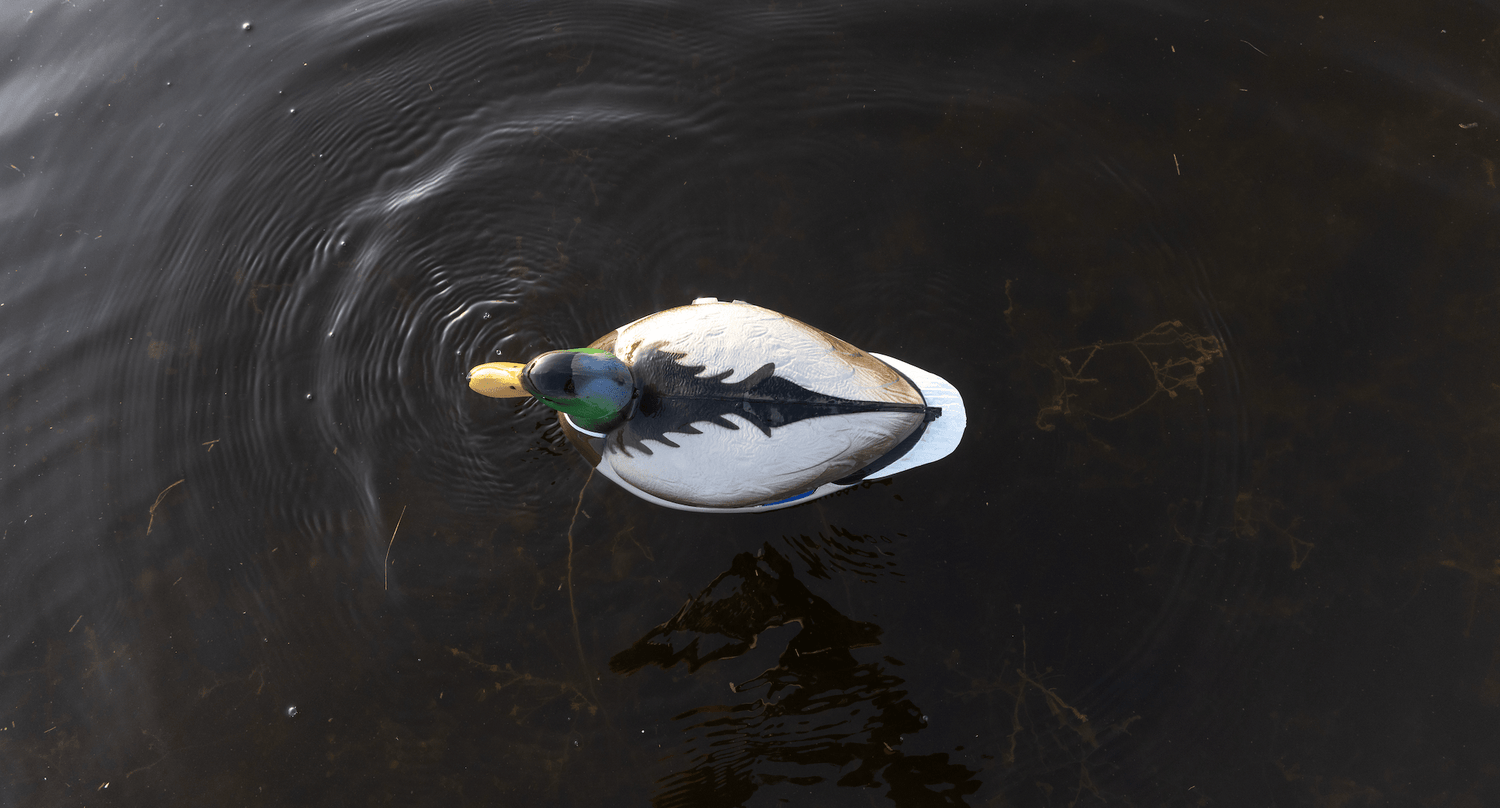
At a hunting camp, the pour is an event. Someone produces the bottle from a bag or a cooler. Cups are found or improvised. The fire is adjusted. People settle into their chairs — still in the same layers they wore when they were pulling motion duck decoys off the water four hours ago. There is a moment of collective anticipation before the first sip that does not exist in a bar.
Rituals change the way we experience things. They signal to the brain that what is about to happen is significant. The bourbon does not change, but your relationship to it does.
The Bourbon That Earns Its Place
Not all bourbon belongs outside. The heavily sweet, entry-level bottles that work fine in a cocktail taste flat and one-dimensional when they are the only thing in the cup. The outdoors strips away the noise. It rewards complexity.
The bourbons that perform best around a fire tend to be the ones with real depth — high-rye mash bills that bring a spicy, dry finish, or wheated bourbons with a long, warm tail that extends well past the swallow. Knob Creek, Elijah Craig, and Four Roses Single Barrel are all bottles that improve dramatically when the setting is right.
The temperature matters too. A bourbon that is slightly cool — not cold, but not room temperature — opens up differently than one that has been sitting in a warm tent. The cold slows the volatilization of the alcohol, letting the grain and wood notes come forward before the heat hits.
The Company
The final ingredient is the one that cannot be bottled. The bourbon tastes better outside because of who is there.
The conversations that happen around a fire after a long day in the field are different from the conversations that happen anywhere else. The shared experience of the day — the cold, the birds that worked the motion duck decoys at first light, the ones that didn’t, the shots made and the shots missed — creates a specific kind of honesty that is hard to replicate in other settings. People say things they mean. They laugh harder. They listen better.
The bourbon is just the mechanism. It gives everyone something to hold while the real thing happens around them.
Pour it outside when you can. The bottle will thank you.
0 comments