
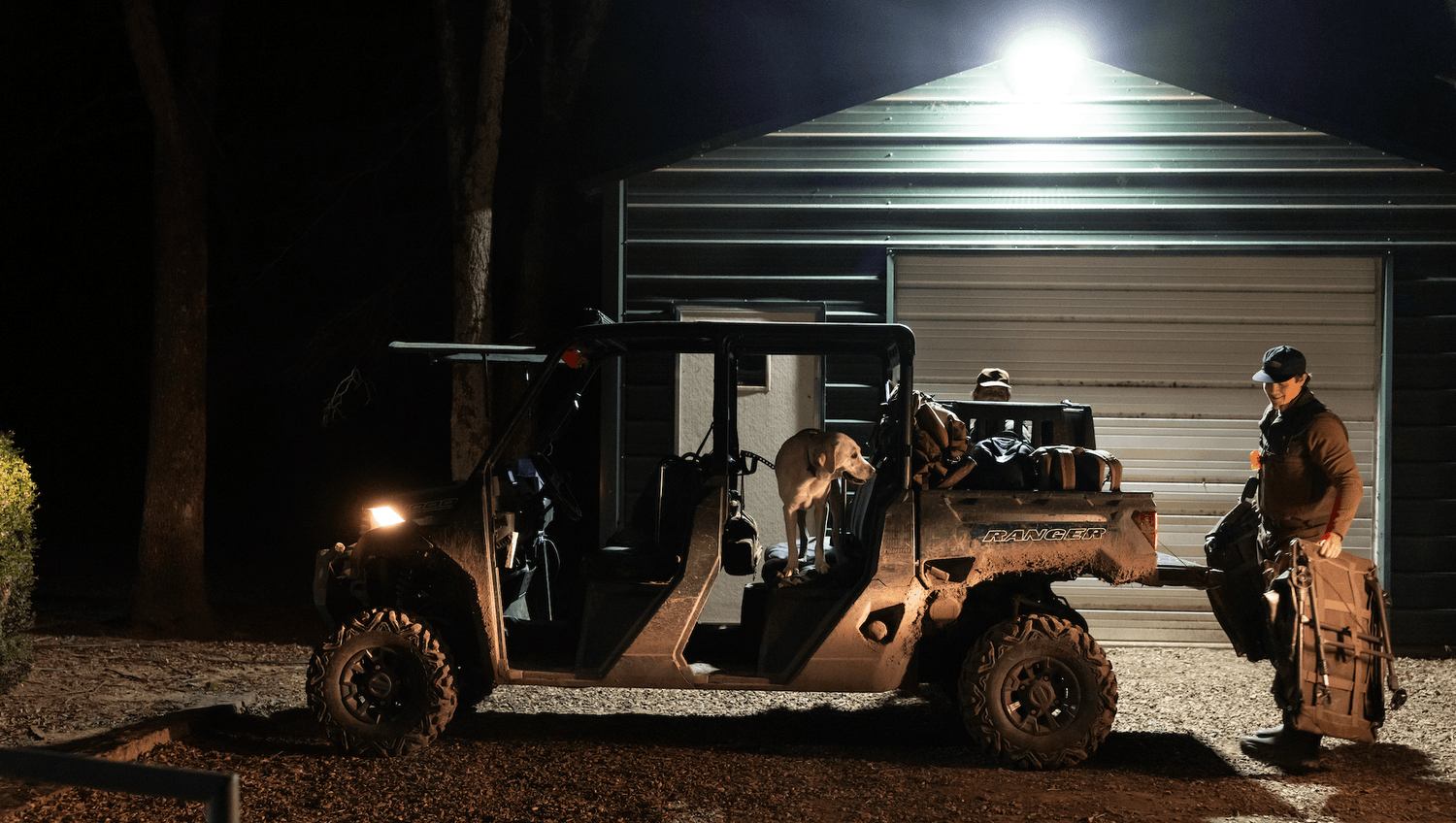
Most hunters do not think of themselves as athletes. They should.
The physical demands of a serious hunting season are real. Walking miles of uneven terrain in heavy waders. Standing in cold water for hours. Hauling motion duck decoys, blind bags, and gear across distances that would humble most people who spend their weeks behind a desk. The hunters who are in good physical condition do not just feel better at the end of the day. They make better decisions, shoot more accurately, and recover faster between hunts.
Physical fitness is the most underrated variable in hunting success, and it is one of the few variables entirely within your control.
The Specific Demands of the Field
The mistake most hunters make when they decide to get in shape for the season is training for the wrong things. They run on treadmills or lift heavy weights in patterns that have no relationship to what they will actually be doing in the field.
The physical demands of hunting are specific. They require sustained low-to-moderate intensity output over long periods, often in cold temperatures and on unstable terrain. They require the ability to carry moderate loads — decoy bags, waders, blind bags — over distances that vary from a few hundred yards to several miles. They require the core stability to shoot accurately from awkward positions, and the grip strength to handle a shotgun for hours in cold weather.
Training for these demands means building a base of cardiovascular endurance through activities that mimic the actual movement patterns. Rucking — walking with a loaded pack — is the single most effective training tool for the hunting athlete. It builds endurance, strengthens the posterior chain, and directly replicates the load-carrying demands of the field. Thirty minutes three times a week with a pack loaded to thirty pounds will produce measurable results in six to eight weeks.
The Cold Weather Factor
Cold weather changes the physical equation in ways that most people underestimate. Your body burns significantly more calories maintaining core temperature in cold conditions. Your cardiovascular system works harder. Your muscles contract differently, and your reaction time slows.
The hunters who train outdoors year-round adapt to these conditions naturally. Their bodies become efficient at generating and retaining heat. They develop the specific muscular endurance that comes from working in cold air rather than a climate-controlled gym.
If you live somewhere with real winters, train outside. The discomfort is the adaptation. A cold morning run or a loaded ruck in November is worth more to your hunting fitness than a month of treadmill sessions.
Mobility and the Long Day
The aspect of hunting fitness that most people ignore entirely is mobility. Specifically, hip mobility and thoracic spine rotation.
The shooting position requires a full rotation of the upper body. A hunter with restricted thoracic mobility cannot swing through a crossing bird cleanly. He compensates by rotating at the hips, which throws off the mount and the follow-through. This is a mechanical problem that no amount of practice at the range will fix if the underlying mobility issue is not addressed.
Ten minutes of daily mobility work — hip flexor stretches, thoracic rotations, and shoulder openers — will produce a noticeable improvement in shooting mechanics within a few weeks. It will also reduce the lower back soreness that most hunters accept as an inevitable part of a long day in the field.
The Return on Investment
The hunters who take their physical preparation seriously are not doing it for vanity. They are doing it because they understand that the season is short, the opportunities are limited, and every variable that can be controlled should be.
You cannot control the weather. You cannot control the migration. You cannot control whether the birds decide to work the motion duck decoys or flare at a hundred yards. But you can control whether you are physically capable of doing the work required when the conditions are right.
The season is coming. The question is whether you will be ready for it.
0 comments